غالباً ما تتم المقارنة بين مصاعد الجر ذات التروس ومصاعد الجر بدون تروس كما لو كان أحدهما أكثر تقدماً من الآخر.
في الواقع، لا يتعلق الاختلاف في الواقع بمستوى التكنولوجيا، بل يتعلق بتصميم النظام وسيناريوهات التطبيق ومتطلبات المشروع.

سوء الفهم الشائع حول مصعد الجر الموجه مقابل مصعد الجر بدون تروس
قبل المقارنة بينهما، دعنا نوضح بعض سوء الفهم الشائع.
يفترض العديد من المشترين أن الفرق بسيط.
في الواقع، ليس كذلك.
إليك بعض الأخطاء الشائعة:
الخطأ 1: عدم وجود تروس أفضل دائماً
ليس دائماً. يعد Gearless أكثر تقدماً في بعض المجالات، ولكنه ليس الخيار الأفضل لكل مشروع.
الخطأ 2: الماكينات الموجهة عفا عليها الزمن
غير صحيح. لا تزال مصاعد الجر الموجهة تستخدم على نطاق واسع لأنها موثوقة وعملية وفعالة من حيث التكلفة.
الخطأ 3: السعر الأقل يعني قيمة أفضل
السعر الأولي المنخفض لا يعني دائماً تكلفة أقل على المدى الطويل.
الخطأ 4: يمكن أن يحل غير المجهز محل المجهز في أي مشروع
ليس بالضرورة. يعتمد الاستبدال على مساحة التركيب وتوافق وحدة التحكم وميزانية الترقية.
لا يتعلق اختيار النظام المناسب باختيار التقنية الأحدث.
يتعلق الأمر باختيار ما يناسب المبنى الخاص بك بشكل أفضل.
ما هو مصعد الجر بدون تروس؟
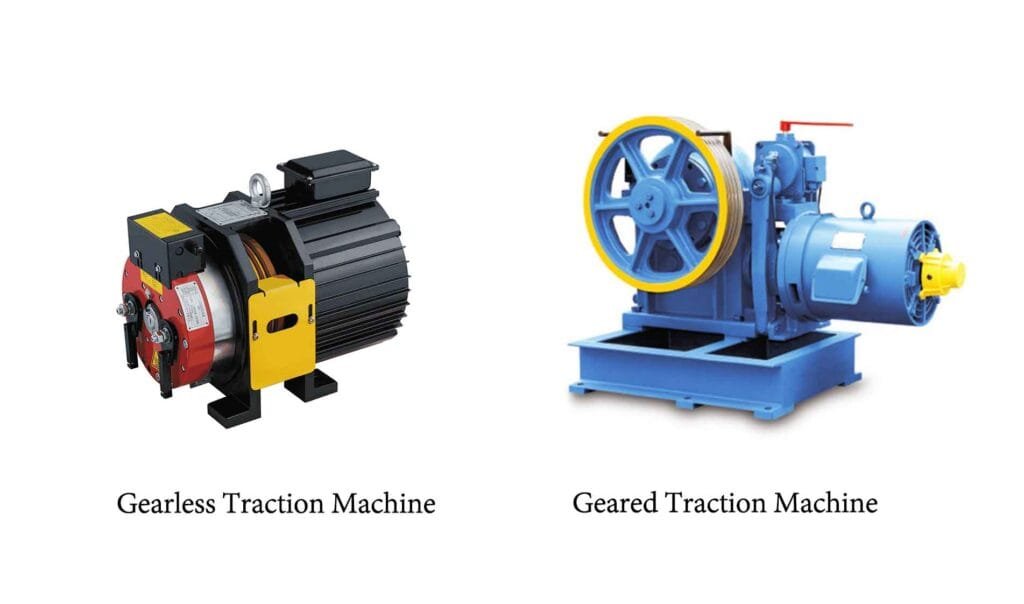
عادةً ما تستخدم رافعة الجر بدون تروس المحرك المتزامن المغناطيسي الدائم (PMSM).
يقوم المحرك بتشغيل حزم الجر مباشرة، بدون علبة تروس.
يقلل تصميم الدفع المباشر هذا من الفقد الميكانيكي ويسمح بتحكم أكثر دقة في السرعة.
تشمل المزايا الرئيسية ما يلي:
- كفاءة أعلى في استخدام الطاقة
- تسارع وتوقف أكثر سلاسة
- ضوضاء تشغيل أقل
- تآكل ميكانيكي أقل
- أداء أفضل للتشغيل عالي السرعة
وبسبب هذه المزايا، تُستخدم مصاعد الجر بدون تروس على نطاق واسع في المباني الحديثة متوسطة الارتفاع والشاهقة حيث الراحة والكفاءة مهمتان.
ما هو مصعد الجر الموجه؟
عادة ما تستخدم ماكينة الجر بدون تروس المصعد عادةً محرك تحريضي غير متزامن بعلبة تروس.
يعمل المحرك بسرعة أعلى، بينما تقلل علبة التروس من السرعة وتزيد من عزم الدوران لدفع حزم الجر.
تم استخدام هذا التصميم التقليدي منذ عقود ولا يزال موثوقاً به على نطاق واسع.
تشمل المزايا الرئيسية ما يلي:
- استثمار أولي أقل
- تقنية ناضجة ومجربة
- قدرة قوية على التعامل مع الأحمال
- الصيانة العملية للمشاريع القياسية
لا تزال مصاعد الجر الموجهة خياراً موثوقاً للعديد من المباني منخفضة الارتفاع ومتوسطة الارتفاع، خاصةً عندما يكون التحكم في التكلفة أولوية.
لندخل في صلب الموضوع مباشرةً: ما هي الاختلافات الحقيقية؟
لا يتعلق الفرق بين مصاعد الجر ذات التروس ومصاعد الجر بدون تروس فقط بما إذا كانت مزودة بتروس أم لا.
يبدأ الفرق الحقيقي من ماكينة الجر نفسها ويؤثر على الكفاءة والسرعة والصيانة والتكلفة على المدى الطويل.
فيما يلي أهم الاختلافات:
1. تصميم ماكينة الجر
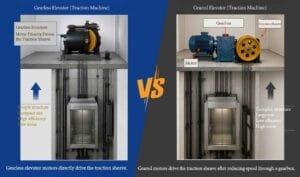
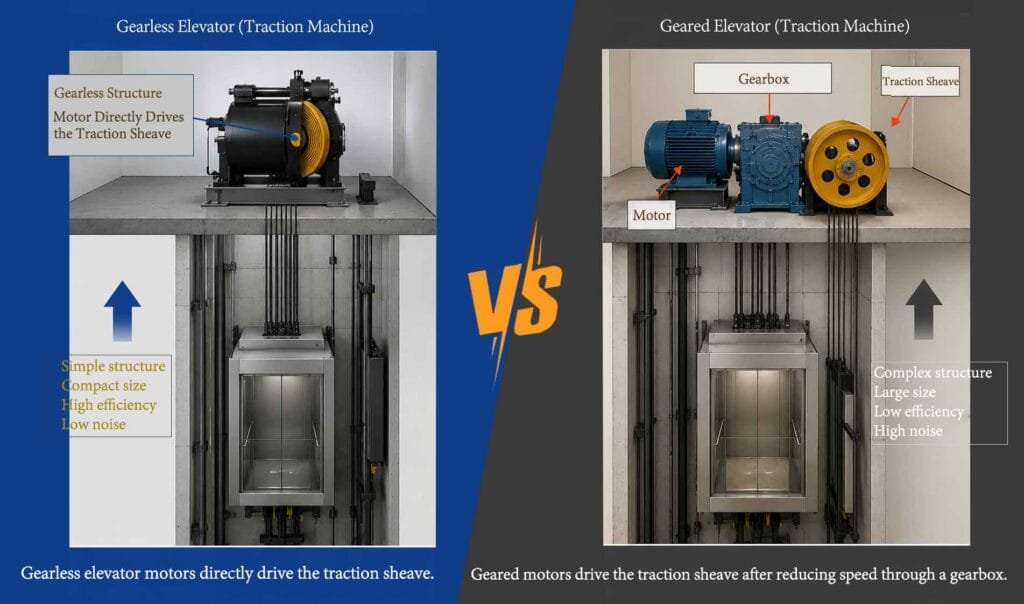
عادةً ما يستخدم مصعد الجر بدون تروس ماكينة جر بدون تروس مغناطيسية دائمة متزامنة بدون تروس.
يقوم المحرك بتشغيل حزمة الجر مباشرةً بدون علبة تروس.
عادةً ما يستخدم مصعد الجر الموجه محرك غير متزامن مع علبة تروس تخفيض.
تقوم علبة التروس بتحويل سرعة المحرك إلى عزم دوران الرفع.
يؤثر هذا الاختلاف الهيكلي على كل عوامل الأداء الأخرى تقريباً.
2. كفاءة الطاقة
عادة ما تكون الأنظمة بدون تروس 20%-35% أكثر كفاءة في استخدام الطاقة من الأنظمة الموجهة التقليدية.
ويرجع السبب الرئيسي في ذلك إلى عدم وجود فقد في احتكاك علبة التروس.
كفاءة المحرك النموذجية:
- PMSM بدون تروس: 90%–96%
- نظام الحث الموجه: 75%–88%
بالنسبة للتشغيل عالي التردد، يمكن أن يؤثر هذا الاختلاف بشكل كبير على تكلفة الكهرباء على المدى الطويل.
3. ضوضاء التشغيل وراحة الركوب
تعمل المصاعد بدون تروس عادةً عند 50-60 ديسيبل
غالبًا ما تكون المصاعد الموجهة حول 65-75 ديسيبل, ، اعتمادًا على جودة علبة التروس وحالة الصيانة.
توفر الأنظمة بدون تروس أيضًا تحكمًا أكثر دقة في التسوية، عادةً في حدود ± 3 مم
غالبًا ما تكون الأنظمة الموجهة حول ± 5-10 مم
يؤثر ذلك بشكل مباشر على راحة الركاب.
4. القدرة على السرعة
تعتبر الأنظمة بدون تروس مثالية للتطبيقات متوسطة وعالية السرعة.
نطاق السرعة النموذجي:
- بدون تروس 1.0 - 10 م/ثانية
- موجه: 0.4 - 2.5 م/ثانية
وهذا هو سبب هيمنة الأنظمة بدون تروس على المشاريع التجارية الشاهقة.
5. متطلبات الصيانة
تحتوي الأنظمة بدون تروس على عدد أقل من الأجزاء الميكانيكية المتحركة.
لا تتطلب استبدال زيت علبة التروس أو فحص تآكل التروس.
تحتاج الأنظمة الموجهة إلى نظام منتظم:
- فحوصات تشحيم التروس
- استبدال الزيت
- فحص تآكل علبة التروس
- صيانة المحاذاة الميكانيكية
وبمرور الوقت، يزيد ذلك من عبء عمل الصيانة.
6. التكلفة الأولية مقابل التكلفة طويلة الأجل
عادة ما يكلف مصعد الجر الموجه عادةً 15%-30% أقل مقدمًا
عادةً ما يوفر مصعد الجر بدون تروس تكلفة تشغيل وصيانة أقل من دورة حياة تتراوح بين 10 و20 سنة
وهذا يعني:
- موجّهة = استثمار أولي أقل
- بدون تروس = عائد أفضل على المدى الطويل
يعتمد الاختيار الصحيح على أولويات المشروع.
7. غرفة الماكينات ومساحة التركيب
تختلف متطلبات التثبيت أيضاً.
مصاعد الجر الموجهة
- تتطلب عادةً غرفة ماكينات منفصلة
- يشغل المحرك + علبة التروس مساحة أكبر
- أسهل في الملاءمة مع المباني القائمة أو القديمة
- مرونة التثبيت والمحاذاة مرنة نسبياً
مصاعد الجر بدون تروس
- غالبًا ما تدعم غرفة الماكينة غرفة الدعم مصعد جر أقل (MRL مصعد الجر) التصميم
- يمكن تركيب آلة الجر داخل العمود
- أكثر إحكاماً وتوفيراً للمساحة
- متطلبات أعلى في دقة التركيب وظروف العمود
الفرق العملي الرئيسي
- موجه: أكثر مرونة في تكييف المباني، خاصة بالنسبة لمشاريع التعديل التحديثي
- بدون تروس أكثر كفاءة من حيث المساحة، ولكن متطلبات دقة التركيب أكثر صرامة
جدول مقارنة مصعد الجر بدون تروس مقابل مصعد الجر الموجه
| العامل | مصعد الجر بدون تروس | مصعد الجر الموجه |
| ماكينة الجر | محرك متزامن المغناطيس الدائم المغناطيس (PMSM)، محرك مباشر | محرك غير متزامن + علبة تروس |
| كفاءة الطاقة | أعلى (خسارة ميكانيكية أقل) | أقل |
| الضوضاء والراحة | ضجيج أقل وقيادة أكثر سلاسة | ضوضاء أعلى، اهتزاز أكثر بمرور الوقت |
| نطاق السرعة | تطبيقات متوسطة إلى عالية السرعة | تطبيقات منخفضة إلى متوسطة السرعة |
| غرفة الماكينة | في كثير من الأحيان MRL (موفر للمساحة) | يتطلب عادةً غرفة للماكينة |
| مرونة التثبيت | كفاءة مساحة أعلى، ولكن بدقة أكثر صرامة | أكثر مرونة لمشاريع التعديل التحديثي |
| الصيانة | صيانة ميكانيكية أقل | يلزم إجراء صيانة دورية لعلبة التروس |
| التكلفة الأولية | أعلى | أقل |
| التكلفة طويلة الأجل | انخفاض تكلفة التشغيل | ارتفاع تكلفة الصيانة مع مرور الوقت |
أيهما يجب أن تختار؟
لا يوجد خيار “أفضل” مطلقاً.
اختر بناءً على احتياجات مشروعك:
اختر Gearless إذا:
- تحتاج إلى راحة أعلى وضوضاء أقل
- المبنى الخاص بك متوسط إلى شاهق الارتفاع
- كفاءة الطاقة والتكلفة طويلة الأجل مهمة
- تفضل التصميم المدمج أو تصميم MRL
اختر موجه إذا:
- مشروعك منخفض إلى متوسط الارتفاع
- الميزانية الأولية محدودة
- لديك هيكل غرفة الماكينة الحالي
- تفضل حلاً مجرباً وفعالاً من حيث التكلفة
الرؤية النهائية
لا يتعلق الخيار الصحيح بمستوى التكنولوجيا.
يتعلق الأمر بمطابقة نظام المصعد مع ظروف المبنى الخاص بك وواقع ميزانيتك.
هل يجب استبدال نظام التروس بنظام بدون تروس؟
ليس دائماً.
يُعد استبدال ماكينة جر مُجهّزة بأخرى بدون تروس ترقية تقنية، ولكنه ليس استبدالاً بسيطاً من واحد إلى واحد.
يجب تقييم عدة عوامل رئيسية أولاً:
1. غرفة الماكينة وظروف المكان
قد تتطلب الأنظمة بدون تروس مواضع تركيب مختلفة أو حتى تركيب قائم على العمود (MRL). قد تحتاج التخطيطات الحالية إلى تعديل.
2. توافق نظام التحكم
تستخدم المحركات غير المزودة بتروس تقنية PMSM، والتي قد تتطلب وحدة تحكم ومشفر وإعداد معلمات مختلفة.
3. تصميم الحمل والتوازن
يمكن أن تؤثر التغييرات في نوع المحرك على سلوك عزم الدوران وضبط النظام.
4. الميزانية ونطاق المشروع
في العديد من الحالات، قد تكلف عملية التحديث الكامل أكثر من المتوقع إذا كانت التغييرات الهيكلية مطلوبة.
الاستنتاج العملي
يمكنك استبدال نظام التروس بنظام بدون تروس، ولكن فقط عندما يتم تقييم النظام بالكامل - وليس فقط آلة الجر.
في بعض المشاريع، إنها ترقية ذكية.
وفي حالات أخرى، يكون ذلك غير ضروري وغير فعال.
إذا لم تكن متأكدًا مما إذا كان نظامك مناسبًا للترقية، فلا تتردد في اتصل بنا للحصول على المشورة المهنية.
الخاتمة
تُستخدم كل من مصاعد الجر بدون تروس ومصاعد الجر الموجهة على نطاق واسع وهي حلول ناضجة تقنياً.
يعتمد الاختيار الصحيح على ارتفاع المبنى والميزانية وظروف التركيب واحتياجات التشغيل على المدى الطويل.
لا يوجد خيار “أفضل” عالمي - فقط الخيار الذي يناسب مشروعك بشكل أفضل.
نتمتع بخبرة تزيد عن 20 عاماً في هذا المجال، ولدينا شبكة توريد عالمية.
تأتي قوتنا من مجموعة منتجاتنا الكاملة وأسعارنا التنافسية، بينما نحافظ على مبدأ واحد فقط: نحن نورد المنتجات الأصلية فقط.