ギア付きエレベーターとギアレス・トラクション・エレベーターは、単に一方が他方より進んでいるかのように比較されることが多い。.
実際には、その違いは技術レベルではなく、システム設計、アプリケーションシナリオ、プロジェクト要件の違いである。.

ギア式トラクション・エレベーターとギアレス・エレベーターに関するよくある誤解
両者を比較する前に、よくある誤解をいくつか解いておこう。.
多くのバイヤーは、その違いは単純なものだと思い込んでいる。.
現実はそうではない。.
よくある間違いをいくつか挙げてみよう:
間違い1:ギアレスは常に優れている
必ずしもそうではない。ギアレスの方が先進的な部分もあるが、すべてのプロジェクトに最適というわけではない。.
間違い2:ギア付きマシンは時代遅れ
そんなことはない。ギア式トラクション・エレベーターは、信頼性が高く、実用的で、費用対効果が高いため、今でも広く使われている。.
間違い3:価格が安いほど価値がある
初期価格が安いからといって、長期的なコストが低いとは限らない。.
間違い4:ギアレスはどんなプロジェクトでもギア付きに取って代わることができる
必ずしもそうではない。設置スペース、コントローラの互換性、アップグレードの予算によります。.
正しいシステムを選ぶことは、新しい技術を選ぶことではない。.
自分の建物に一番合うものを選ぶことだ。.
ギアレス牽引エレベーターとは?
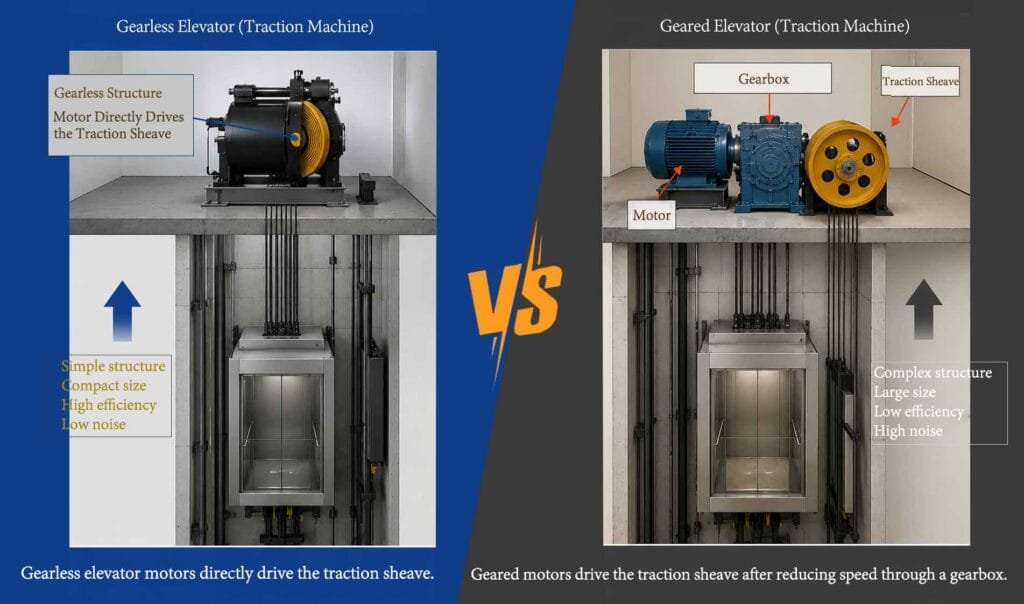
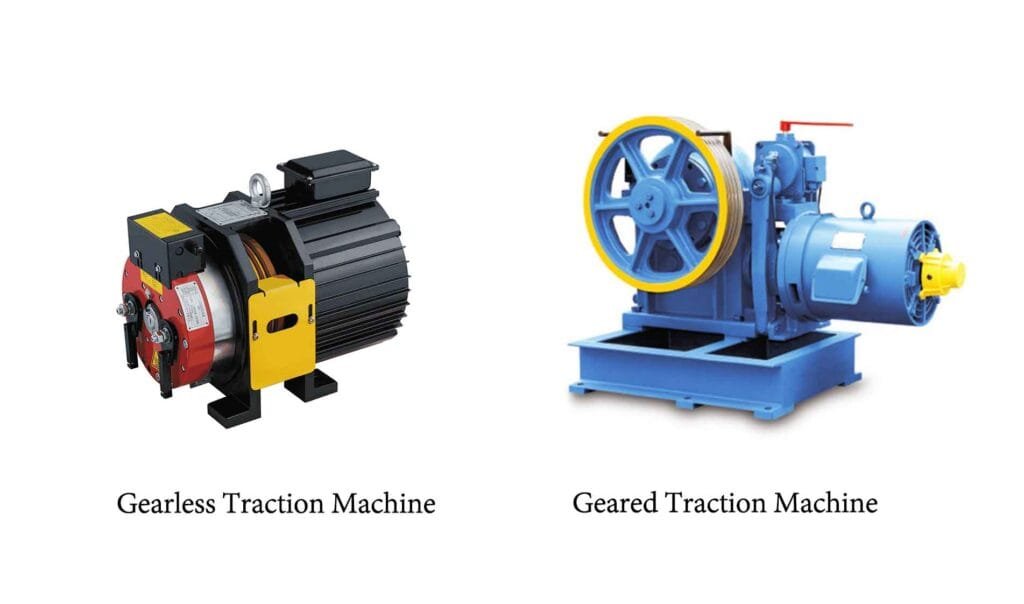
ギアレス牽引リフトは通常 永久磁石同期モータ(PMSM).
モーターは、ギアボックスなしでトラクションシーブを直接駆動する。.
このダイレクトドライブ設計は、機械的なロスを減らし、より精密な速度制御を可能にする。.
主な利点は以下の通り:
- より高いエネルギー効率
- よりスムーズな加速と停止
- より低い走行音
- 機械的摩耗が少ない
- 高速走行時の性能向上
このような利点から、ギアレス・トラクション・エレベーターは、快適性と効率が重視される現代の中高層ビルで広く使用されている。.
ギア式トラクション・エレベーターとは?
エレベーターのギアレス牽引機には、通常、以下のものが使用される。 非同期誘導電動機 ギアボックス付き。.
モーターはより高速で作動し、ギアボックスはトラクションシーブを駆動するために速度を落とし、トルクを増加させる。.
この伝統的なデザインは何十年も使われており、今でも広く信頼されている。.
主な利点は以下の通り:
- 初期投資の低減
- 成熟した実証済みの技術
- 強力な負荷処理能力
- 標準的なプロジェクトのための実践的なメンテナンス
ギア式トラクション・エレベーターは、多くの低層ビルや中層ビルにとって、特にコスト管理が優先される場合には、今でも信頼できる選択肢である。.
本題に入ろう:本当の違いは何か?
ギア付きトラクション・エレベーターとギアレス・トラクション・エレベーターの違いは、ギアの有無だけではない。.
本当の違いはトラクションマシンそのものから始まり、効率、スピード、メンテナンス、長期的なコストに影響する。.
以下が最も重要な違いである:
1.牽引機の設計
ギアレス牽引エレベーターは通常、永久磁石同期ギアレス牽引機を使用する。.
モーターはギアボックスなしでトラクションシーブを直接駆動する。.
ギア式トラクション・エレベーターは通常、減速ギアボックス付きの非同期モーターを使用する。.
ギアボックスはモーター速度をリフティングトルクに変換する。.
この構造的な違いは、他のほとんどすべての性能要素に影響する。.
2.エネルギー効率
ギアレスシステムは通常 20%-35%よりエネルギー効率が高い 従来のギヤードシステムよりも.
これは主に、ギアボックスの摩擦損失がないためだ。.
標準的なモーター効率:
- ギアレスPMSM: 90%–96%
- ギア式インダクションシステム: 75%–88%
高周波運転では、この差が長期的な電気料金に大きく影響する。.
3.走行音と乗り心地
ギアレスエレベーターは通常、以下の条件で運転される。 50-60 dB
ギヤ式エレベーターは多くの場合 65-75 dB, ギアボックスの品質とメンテナンスの状態によって異なる。.
ギアレスシステムはまた、より正確な水平制御を提供します。 ±3mm
ギヤード・システムは多くの場合 ±5-10 mm
これは乗客の快適性に直結する。.
4.スピード能力
ギアレスシステムは中・高速用途に最適です。.
標準的な速度範囲:
- ギアレス: 1.0-10 m/s
- ギア付き: 0.4-2.5 m/s
これが、ギアレスシステムが高層商業プロジェクトで主流となっている理由である。.
5.メンテナンス要件
ギアレスシステムは可動機械部品が少ない。.
ギアボックスのオイル交換やギアの摩耗点検は必要ない。.
ギアシステムは定期的なメンテナンスが必要だ:
- ギアの潤滑点検
- オイル交換
- ギアボックスの摩耗点検
- メカニカル・アライメントのメンテナンス
時間が経つにつれて、メンテナンスの負担が増える。.
6.初期コストと長期コスト
歯車式トラクション・エレベーターは通常、次のような価格で販売されている。 15%-30%は前払い金が少ない
ギヤレストラクションエレベーターは、通常、運転コストとメンテナンスコストが低い。 10~20年のライフサイクル
ということだ:
- ギア式=初期投資が少ない
- ギアレス=長期的なリターンの向上
正しい選択はプロジェクトの優先順位による。.
7.機械室と設置スペース
設置条件も異なる。.
ギア式トラクション・エレベーター
- 通常は 独立した機械室
- モーター+ギアボックスでより大きなスペースを取る
- 既存の建物や古い建物への適合が容易
- 取り付けとアライメントの許容範囲は比較的柔軟
ギアレス・トラクション・エレベーター
- 機械室レス・トラクション・エレベーター(MRLリフト)に対応することが多い。 デザイン
- 牽引機はシャフト内部に設置可能
- よりコンパクトで省スペース
- 取り付け精度とシャフト条件への要求が高い
実用上の主な違い
- ギア付き: 特にレトロフィット・プロジェクトでは、建物への適応をより柔軟に行うことができる。
- ギアレス: スペース効率は向上するが、設置精度の要求は厳しくなる
ギアレス・トラクション・エレベーターとギア式トラクション・エレベーターの比較表
| ファクター | ギアレス牽引エレベーター | ギア式トラクション・エレベーター |
| 牽引機 | 永久磁石同期モータ (PMSM)、ダイレクトドライブ | 非同期モーター + ギアボックス |
| エネルギー効率 | 高い(機械損失が低い) | より低い |
| 騒音と快適性 | 低騒音、スムーズな乗り心地 | 騒音が大きく、振動が大きい |
| 速度範囲 | 中高速アプリケーション | 低速から中速のアプリケーション |
| マシン・ルーム | しばしばMRL(省スペース) | 通常、機械室が必要 |
| 設置の柔軟性 | スペース効率は高いが、精度はより厳しい | 改修プロジェクトにより柔軟に対応 |
| メンテナンス | 機械メンテナンスの低減 | 定期的なギアボックスのメンテナンスが必要 |
| 初期費用 | より高い | より低い |
| 長期コスト | 営業コストの低減 | 長期的なメンテナンスコストが高い |
どちらを選ぶべきか?
絶対的な “より良い ”選択肢はない。.
プロジェクトのニーズに合わせてお選びください:
ギアレスを選ぶなら
- より高い快適性と低騒音が必要
- 中高層ビル
- エネルギー効率と長期的コストの問題
- コンパクトまたはMRLデザインを好む
その場合はギアを選択する:
- プロジェクトは低層から中層
- 初期予算は限られている
- 既存の機械室構造を持っている
- 実績があり、費用対効果の高いソリューションをご希望の場合
最終的な洞察
正しい選択は技術レベルではない。.
それは、エレベーター・システムを建物の条件と予算の現実に合わせることです。.
ギアシステムをギアレスに交換すべきか?
いつもというわけではない。.
ギア付きトラクション・マシンをギアレス・トラクション・マシンに置き換えることは技術的なアップグレードではあるが、単純な1対1の交換ではない。.
まず、いくつかの重要な要素を評価しなければならない:
1.機械室と空間の条件
ギアレスシステムでは、異なる取り付け位置、あるいはシャフトベースの取り付け(MRL)が必要になる場合があります。既存のレイアウトの変更が必要になる場合もあります。.
2.制御システムの互換性
ギアレスモータはPMSM技術を使用しているため、異なるコントローラ、エンコーダ、パラメータ設定が必要になる場合があります。.
3.負荷とバランスの設計
モーターの種類を変えると、トルクの挙動やシステムのチューニングに影響を与える可能性があります。.
4.予算とプロジェクト範囲
多くの場合、構造的な変更が必要であれば、完全な近代化には予想以上の費用がかかるかもしれない。.
実践的結論
ギア付きシステムをギアレスに置き換えることは可能だが、それはトラクションマシンだけでなく、システム全体を評価した場合に限られる。.
プロジェクトによっては、スマートなアップグレードとなる。.
また、不必要で非効率なこともある。.
お使いのシステムがアップグレードに適しているかどうかわからない場合は、お気軽に下記までお問い合わせください。 お問い合わせ 専門家のアドバイスのために。.
結論
ギヤレス・エレベーターもギヤード・エレベーターも、広く使用されており、技術的に成熟したソリューションである。.
適切な選択は、建物の高さ、予算、設置条件、長期運用のニーズによって異なります。.
普遍的な “より良い ”選択肢はなく、あなたのプロジェクトに最も適した選択肢があるだけだ。.
適切なシステムの選択にお困りでしたら、技術サポートやプロジェクトベースのご提案など、お気軽にお問い合わせください。.
当社は20年以上の業界経験を有し、グローバルなサプライチェーン・ネットワークを持っています。.
当社の強みは、豊富な品揃えと競争力のある価格設定にあります。.