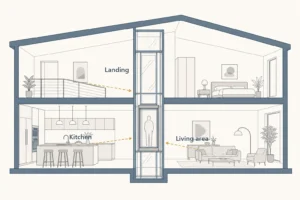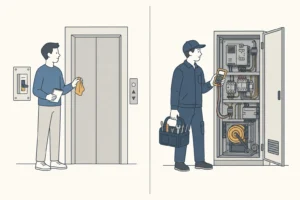
Os tipos de elevadores domésticos incluem os sistemas de tração, hidráulicos, de parafuso, pneumáticos e de plataforma. A escolha do tipo de elevador doméstico depende do espaço disponível e das condições do edifício. Quer se trate de um elevador doméstico, residencial, privado ou para moradias, cada opção proporciona um transporte vertical seguro e prático para as casas modernas.
1. Que tipos de elevadores domésticos existem?
Os elevadores domésticos podem ser divididos em vários tipos principais, consoante o seu modo de funcionamento e a sua construção.
Se não estiver familiarizado com elevadores, não precisa de compreender primeiro os pormenores técnicos.
Só precisas de saber uma ideia simples:
Não é necessário entrar logo em pormenores técnicos.
Basta compreender um conceito simples:
A seguir, apresentamos os cinco tipos mais comuns que encontrará no mercado.
1.1. Elevador doméstico de tração (tipo mais comum)
Este é o elevador doméstico mais utilizado em casas e moradias modernas.
Funciona de forma semelhante a um “sistema de roldanas”.
Os cabos de aço puxam a cabina do elevador para cima e para baixo com a ajuda de um motor.
Uma ideia simples:
▶É como um cesto puxado por cordas, controlado por um motor.
Principais características:
- Pode ser concebido com ou sem sala de máquinas
- Movimento suave e estável
- Silencioso durante o funcionamento
- Suficientemente rápido para a utilização doméstica diária
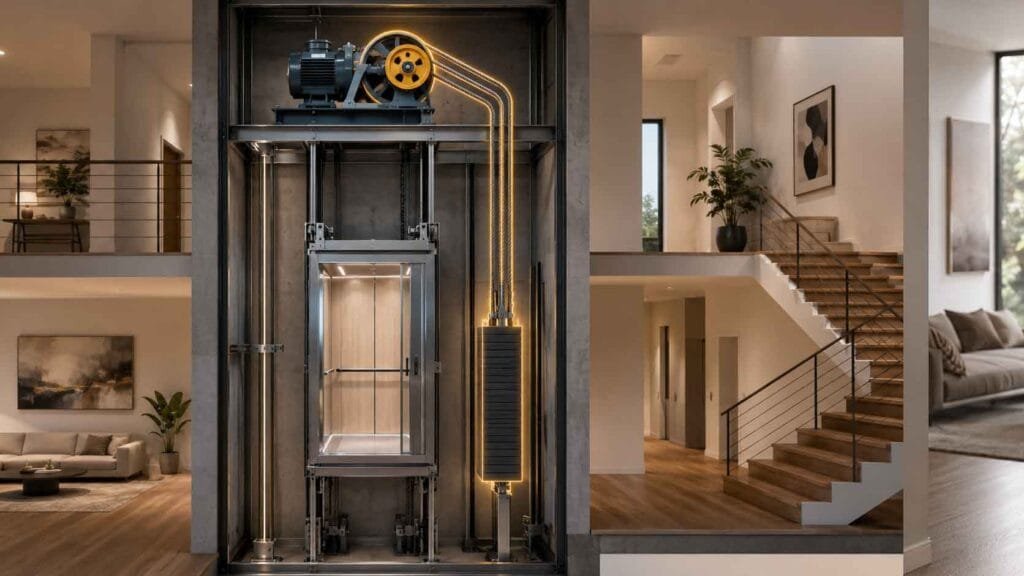
O que deve ter em conta:
▶Este é o “tipo de elevador padrão” utilizado na maioria das casas modernas.
Ideal para:
- Moradias
- Casas novas
- Casas com espaço suficiente para um poço
1.2. Elevador doméstico hidráulico
Este tipo utiliza a pressão do óleo para impulsionar o elevador para cima.
Uma bomba hidráulica envia óleo para um cilindro, que eleva a cabina.
Uma ideia simples:
▶Funciona como um “macaco hidráulico a levantar um carro”.
Principais características:
- Potência de elevação muito estável e elevada
- Requisitos de instalação reduzidos
- Normalmente mais lentos do que os elevadores de tração
- Pode ser necessário um pequeno espaço para a bomba
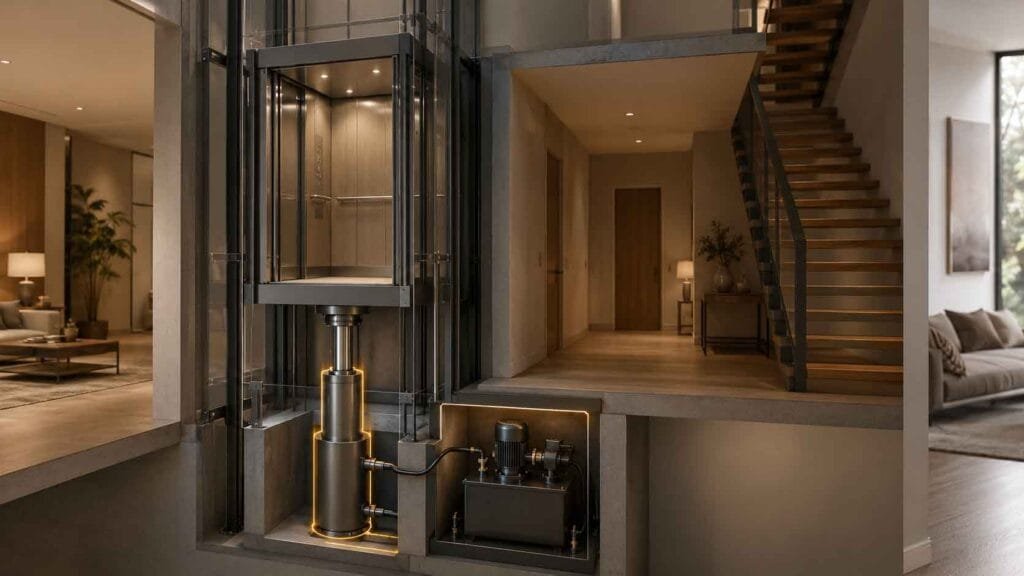
O que deve ter em conta:
▶É eficaz e simples, mas não é a opção mais rápida. O que deve ter em conta:
▶É potente e fácil de utilizar, mas não é a opção mais rápida.
Ideal para:
- Casas de um só piso
- Renovação de uma casa antiga
- Habitações com condições limitadas do poço de luz
1.3 Elevador doméstico com acionamento por parafuso
Este tipo de mecanismo move-se através de um sistema composto por um parafuso grande e uma porca.
A cabina sobe e desce ao rodar ao longo do parafuso.
Uma ideia simples:
▶Como um “macaco de carro que gira para levantar para cima”.
Principais características:
- Não são necessários cabos de aço
- Estrutura muito compacta
- Pode ser instalado em espaços pequenos
- A velocidade é relativamente baixa
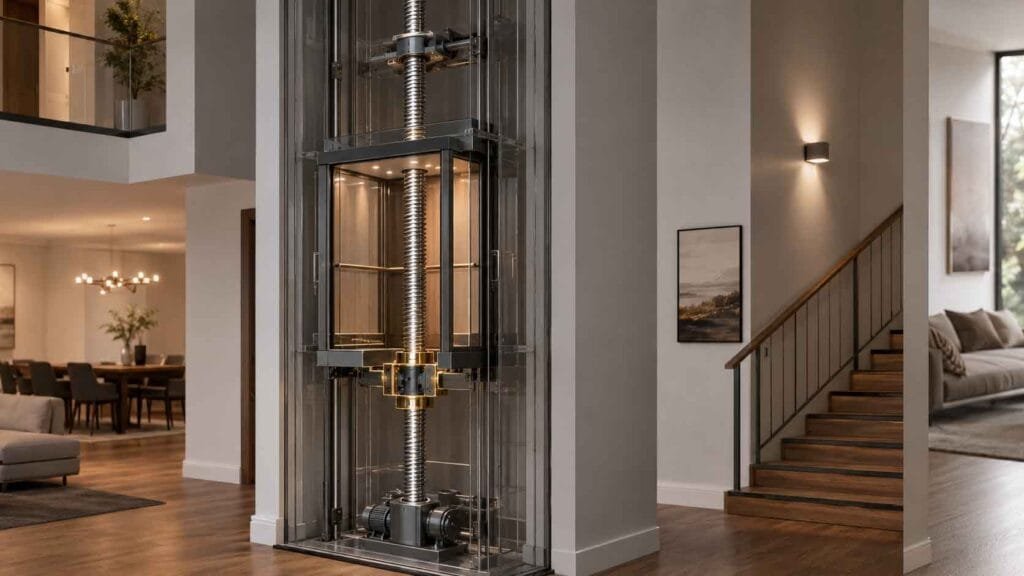
O que deve ter em conta:
▶É o modelo que ocupa menos espaço.
Ideal para:
- Casas pequenas
- Edifícios antigos
- Projetos sem espaço para um poço
1.4. Elevador doméstico pneumático (a vácuo)
Este elevador utiliza as diferenças de pressão atmosférica para deslocar a cabina no interior de um tubo transparente.
Uma ideia simples:
▶Como um “tubo de vácuo que empurra e puxa a cabina com ar”
Principais características:.
- Não são necessários cabos nem sala de máquinas
- Design muito moderno e elegante
- Instalação rápida
- Capacidade de peso limitada
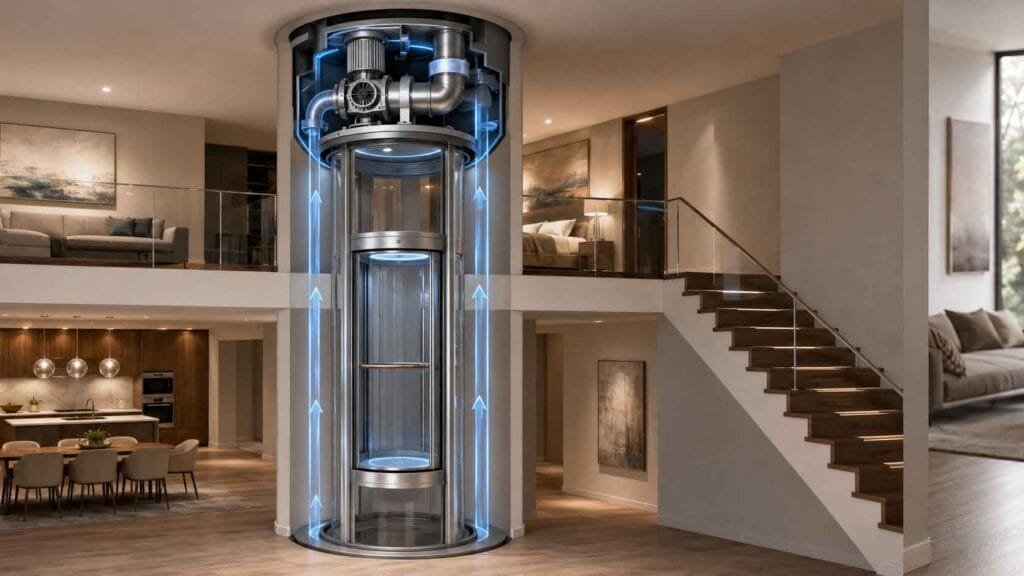
O que deve ter em conta:
▶Tem um aspeto futurista e é fácil de instalar, mas tem uma capacidade limitada.
Ideal para:
- Casas de luxo
- Para uso familiar reduzido
- Projetos centrados no design e na aparência
1.5. Elevador de plataforma (elevador doméstico simples)
Trata-se de um sistema de elevação mais simples, não de um elevador tradicional completo.
Faz com que uma plataforma se mova para cima e para baixo, normalmente a baixa velocidade.
Uma ideia simples:
▶Como uma “pequena mesa elevatória entre andares”.
Principais características:
- Estrutura simples
- Baixo custo
- Baixa velocidade
- Frequentemente utilizado para fins de acessibilidade
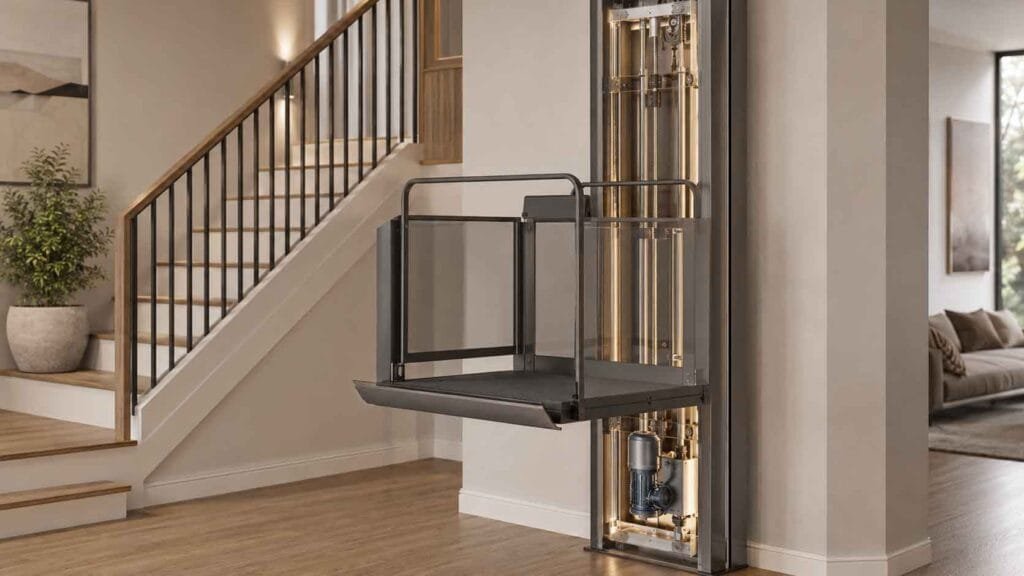
O que deve ter em conta:
▶Não se trata de um elevador completo, mas sim de uma solução básica de elevação.
Ideal para:
- Utilizadores de cadeiras de rodas
- Pessoas idosas
- Movimento vertical de curta distância
Resumo rápido (fácil de memorizar)
Se quiseres memorizá-los de forma simples:
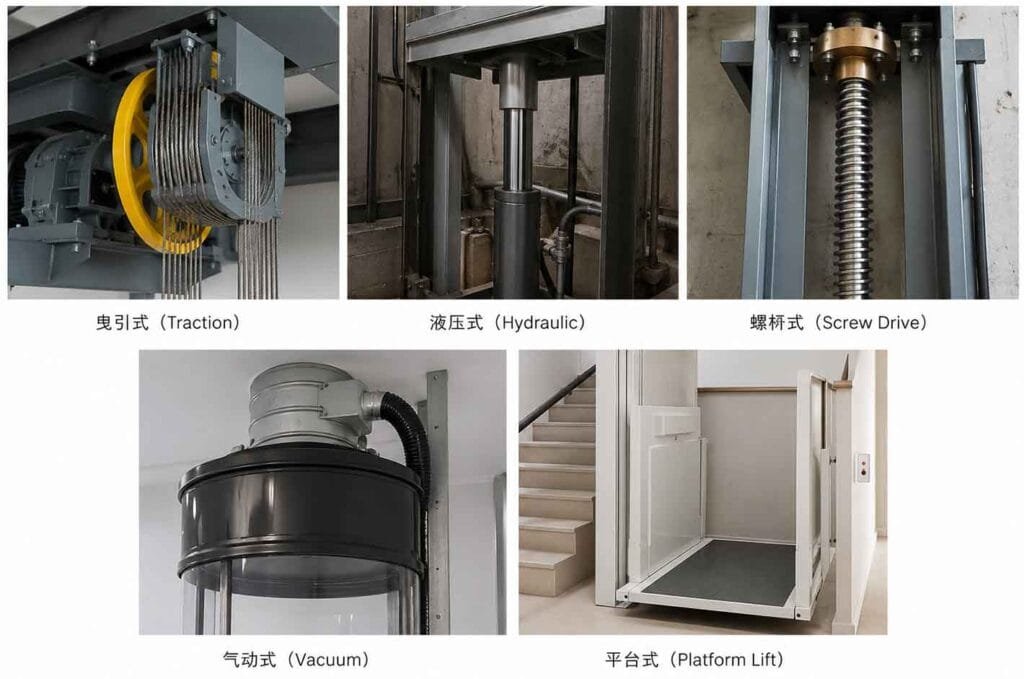
- Tração → Elevador doméstico padrão (o mais comum)
- Hidráulico → Elevação robusta, sistema simples
- Acionamento por parafuso → Solução para espaços reduzidos
- Pneumático → Design moderno, capacidade limitada
- Plataforma elevatória → Elevador básico para acessibilidade
2. Principais diferenças entre os vários tipos de elevadores domésticos
Para o ajudar a compreender melhor as diferenças, a tabela abaixo compara os principais tipos de elevadores domésticos em vários aspetos importantes.
Tabela comparativa de elevadores domésticos
| Tipo | Sistema de condução | Necessidade de espaço | Conforto | Velocidade | Instalação | Nível de custos | Principal vantagem | Principal limitação |
| Elevador de tração | Cabos de aço + motor | Médio a elevado (necessita de eixo) | Muito suave | Rápido | De médio a complexo | Médio a elevado | Melhor desempenho global | Requer espaço adequado para o eixo |
| Elevador hidráulico | Sistema de pressão do óleo | Médio (requer espaço para a bomba) | Estável | Médio | Médio | Médio | Grande capacidade de elevação | É mais lento e necessita de um sistema de lubrificação |
| Elevador com acionamento por parafuso | Sistema de parafuso rotativo | Muito baixo | Básico a médio | Lento | Fácil | Médio | Instalação em espaços reduzidos | Menor velocidade e conforto |
| Elevador pneumático | Pressão atmosférica (tubo de vácuo) | Muito baixo | Sensação suave, mas diferente | Médio | Muito fácil | Elevado | Design moderno, não requer eixo | Capacidade de carga limitada |
| Plataforma elevatória | Mecanismo de elevação simples | Mínimo | Básico | Muito lento | Mais fácil | Baixa | A solução mais barata e mais simples | Não é um sistema de elevadores completo |
Como interpretar esta tabela (Importante)
- Requisitos de espaço → Será que cabe na tua casa?
- Conforto → O uso diário será confortável?
- Instalação → A construção é fácil ou complexa?
- Nível de custos → Encaixa-se no teu orçamento?
Resumo simples das conclusões
- Tração → A melhor solução global para elevadores domésticos
- Hidráulico → Sistema de elevação robusto e estável
- Acionamento por parafuso → Ideal para espaços pequenos e remodelações
- Pneumático → Design moderno e fácil de instalar
- Plataforma elevatória → Opção de acessibilidade básica e de baixo custo

3. Como escolher o elevador doméstico certo?
A escolha de um elevador doméstico não se resume apenas ao tipo.
Tem mais a ver com o teu estado da casa, orçamento e necessidades diárias.
A seguir, apresentamos os principais fatores que deve ter em conta.
3.1. Verifique primeiro a estrutura da sua casa
Este é o passo mais importante.
Pergunta a ti mesmo:
- Já tenho um poço de elevador?
- Posso construir um poço na minha casa?
- A minha casa é nova ou antiga?
▶ Se já tiver um poço, os elevadores de tração são normalmente a melhor opção.
▶ Caso contrário, os modelos de acionamento por parafuso ou pneumáticos são mais fáceis.
3.2. Verificar o número de andares
Alturas diferentes exigem sistemas diferentes:
- 2–3 andares: quase todos os tipos são adequados
- 4 a 6 andares: qual é a melhor opção, tração ou hidráulica?
- Edifícios mais altos: normalmente é necessária tração
▶ Normalmente, quanto mais andares, mais estável tem de ser o sistema.
3.3. Pense em quem irá utilizá-lo
Isto é muitas vezes ignorado, mas é muito importante:
- Pessoas idosas → é importante que o funcionamento seja suave e estável
- Utilizadores de cadeiras de rodas → é necessária uma plataforma elevatória ou uma cabina mais espaçosa
- Utilização diária em família → o conforto e a rapidez são mais importantes
▶ Adapte sempre o elevador ao utilizador, e não apenas ao edifício.
3.4. Ter em conta o espaço disponível
O espaço é, muitas vezes, a maior limitação. Escolher as dimensões adequadas para um elevador doméstico é um dos passos mais importantes no planeamento de um elevador residencial.
- Espaço amplo → o elevador de tração é a escolha ideal
- Espaço médio → o elevador hidráulico funciona bem
- Espaço reduzido → é preferível um acionamento por parafuso ou pneumático
▶ É o espaço que determina o que é possível, e não apenas a preferência.
3.5. Defina o seu orçamento
Uma regra simples:
- Orçamento mais elevado → tração ou pneumático (maior conforto ou melhor design)
- Orçamento médio → hidráulico
- Orçamento mais reduzido → elevador de parafuso ou plataforma elevatória
▶ Não opte apenas pela opção mais barata. Tenha em conta a utilização a longo prazo.
3.6. Pense no nível de conforto
Pergunta a ti mesmo:
- Quero uma viagem o mais suave possível?
- Será que me importo com o ruído?
- Utilizo-o muitas vezes por dia?
▶ Se o conforto for muito importante, o elevador de tração é normalmente a melhor opção.

4. Que tipo de elevador doméstico é o mais adequado para si?
Existem diferentes tipos de elevadores domésticos, concebidos para diferentes condições das habitações e necessidades dos utilizadores. Segue-se um guia simples para o ajudar a escolher o tipo mais adequado à sua situação.
Para a maioria das moradias convencionais e casas novas
Se a sua casa for uma moradia moderna ou um edifício novo com espaço suficiente e um poço já preparado, o elevador de tração é normalmente a melhor opção.
Oferece um funcionamento suave, um desempenho estável e uma experiência de condução confortável. É também o tipo mais comum utilizado em edifícios residenciais, o que o torna uma opção segura e equilibrada para a maioria das famílias.
Para espaços pequenos ou projetos de remodelação
Se a sua casa não tiver um poço reservado, ou se o espaço for limitado, o elevador com acionamento por parafuso ou elevador pneumático é, muitas vezes, mais adequado.
Estes dois tipos requerem menos trabalhos de construção e podem ser instalados em espaços mais reduzidos. São frequentemente utilizados em projetos de renovação ou em habitações onde é difícil construir um poço completo.
Para edifícios de poucas alturas com grandes necessidades de elevação
Se o seu edifício tiver apenas alguns andares e preferir um sistema de elevação estável, o elevador hidráulico é uma opção prática.
Proporciona uma grande capacidade de elevação e um movimento estável, tornando-o adequado para pequenos edifícios residenciais onde a velocidade não é a principal prioridade.
Para acessibilidade e deslocamento vertical básico
Se o objetivo principal for ajudar pessoas idosas ou utilizadores de cadeiras de rodas a deslocarem-se entre andares, um plataforma elevatória normalmente é suficiente.
É simples, económico e centra-se no transporte vertical básico, em vez de no conforto total de um elevador.
Conclusão simples
Não existe um “melhor” elevador doméstico universal.
A escolha certa depende do seu espaço, da estrutura do edifício e das suas necessidades de utilização diária.

5. Quais são as condições necessárias para instalar um elevador doméstico?
Antes de escolher um elevador doméstico, é importante compreender os requisitos básicos de instalação. Os diferentes sistemas têm necessidades distintas, mas há sempre várias condições fundamentais a ter em conta.
Condições do espaço e do poço
O espaço é o primeiro fator a ter em conta.
Alguns elevadores, como os de tração, requerem normalmente uma estrutura de poço adequada. Outros, como os elevadores de parafuso ou os pneumáticos, podem ser instalados em espaços mais pequenos ou mais flexíveis.
Se a sua casa já tiver um poço reservado, a instalação será muito mais fácil. Caso contrário, terá de escolher um sistema que exija o mínimo de obras.
Altura do edifício e distância percorrida
A maioria dos elevadores domésticos foi concebida para 2 a 6 andares.
O número de andares influencia a potência do motor, a conceção do sistema e o desempenho global. Os edifícios mais altos requerem, normalmente, sistemas mais estáveis e potentes.
Requisitos relativos à altura livre do poço e da parte superior
Alguns tipos de elevadores requerem um fosso na parte inferior e espaço suficiente no último andar.
No entanto, os sistemas compactos modernos podem reduzir ou mesmo eliminar esses requisitos, tornando-os adequados para projetos de renovação.
Condições de alimentação elétrica
Os elevadores domésticos funcionam normalmente com a rede elétrica doméstica normal.
No entanto, sistemas diferentes podem ter necessidades de potência diferentes, dependendo da capacidade de carga e do método de condução. É importante verificar este aspeto antes da instalação.
Tempo de instalação e impacto na construção
Alguns elevadores exigem obras de construção civil e um tempo de instalação mais longo, especialmente os sistemas tradicionais com poço.
Outros tipos foram concebidos para uma instalação mais rápida, com um impacto mínimo no edifício existente, o que é ideal para projetos de renovação.
Conclusão simples
A melhor solução de instalação depende sempre das condições da sua casa. Uma avaliação adequada antes de escolher o sistema ajudará a reduzir os custos, o tempo de construção e eventuais problemas futuros.
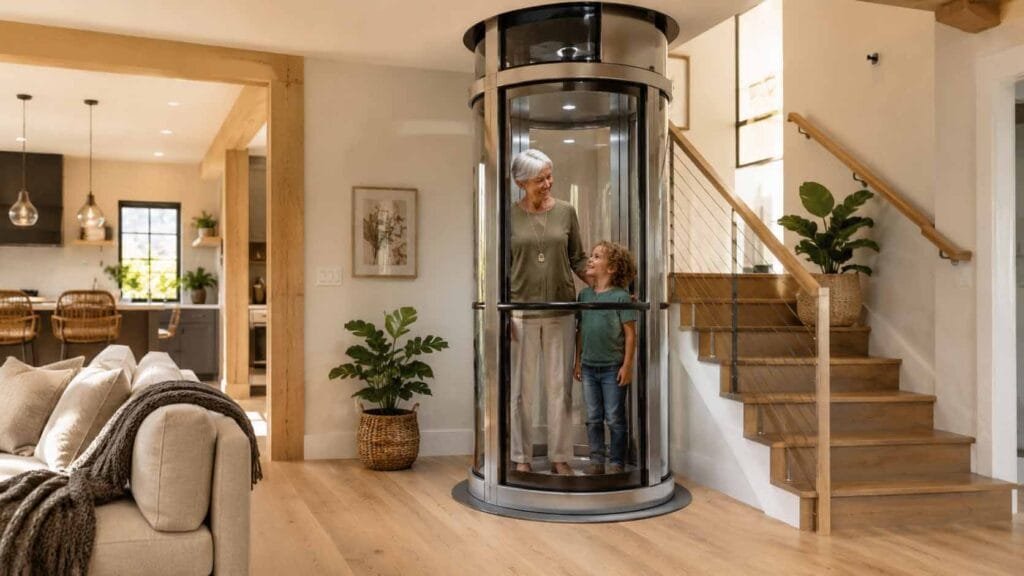
6. Qual é a gama de preços dos elevadores domésticos?
O preço de um elevador doméstico pode variar bastante. Depende do tipo de elevador, do tamanho, do número de andares e do nível de personalização.
Soluções básicas
Alguns sistemas simples, como plataformas elevatórias ou elevadores básicos com acionamento por parafuso, são normalmente mais acessíveis.
Foram concebidos para movimentos verticais básicos e para uma utilização doméstica simples.
Estas opções são frequentemente escolhidas para projetos com orçamento limitado ou casas pequenas.
Soluções de gama média
Os elevadores hidráulicos e alguns sistemas de acionamento por parafuso padrão situam-se, normalmente, na gama de preços média.
Oferecem um equilíbrio entre desempenho, conforto e custo. Muitos pequenos edifícios residenciais e projetos de reabilitação optam por este nível.
Soluções de gama alta
Os elevadores de tração e os elevadores pneumáticos (a vácuo) são, normalmente, mais caros.
Os sistemas de tração oferecem maior conforto e estabilidade a longo prazo, enquanto os elevadores pneumáticos se centram mais no design moderno e na aparência.
Estas opções são frequentemente utilizadas em moradias e residências de luxo.
Conclusão simples
Não existe um preço fixo para os elevadores domésticos.
O custo final depende da estrutura do seu edifício, do sistema escolhido e das condições de instalação.
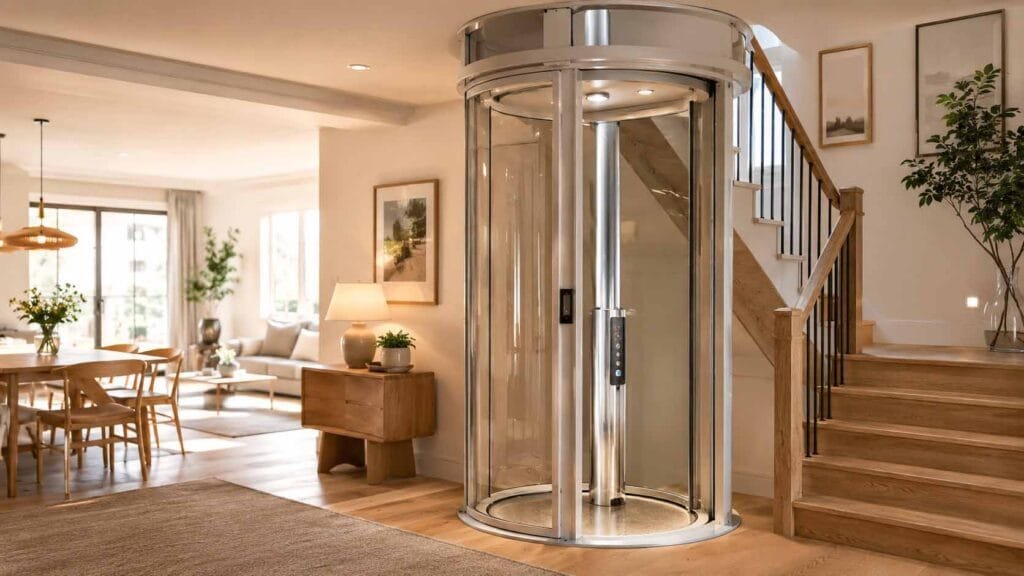
7. Os elevadores domésticos são seguros?
Os elevadores domésticos são concebidos com vários sistemas de segurança. Quando instalados e mantidos de forma adequada, são seguros para utilização diária.
Sistemas básicos de segurança
A maioria dos elevadores domésticos inclui características de segurança padrão, tais como:
- Sistema de paragem de emergência
- Proteção contra sobrecarga
- Sistema de controlo de velocidade
- Fecho de segurança para portas
Estes sistemas ajudam a prevenir riscos operacionais comuns.
Proteção de emergência
Em caso de falha de energia, muitos elevadores domésticos modernos estão concebidos para parar em segurança.
Alguns sistemas conseguem deslocar lentamente a cabina até ao piso mais próximo, permitindo que os passageiros saiam em segurança.
Estabilidade estrutural
Os diferentes tipos de elevadores têm estruturas diferentes, mas todos são concebidos para transportar cargas específicas com segurança.
Quando instalada corretamente, de acordo com as orientações do fabricante, a estrutura é estável e fiável para uma utilização a longo prazo.
Importância da instalação e da qualidade
A segurança não depende apenas do tipo de elevador.
A instalação correta e a manutenção regular são igualmente importantes.
Um sistema bem instalado, proveniente de um fabricante de confiança, é normalmente muito seguro para utilização doméstica.
Conclusão simples
Os elevadores domésticos são seguros quando são devidamente escolhidos, instalados e mantidos.
A maioria dos riscos de segurança decorre de uma instalação inadequada ou da falta de manutenção, e não da própria tecnologia.
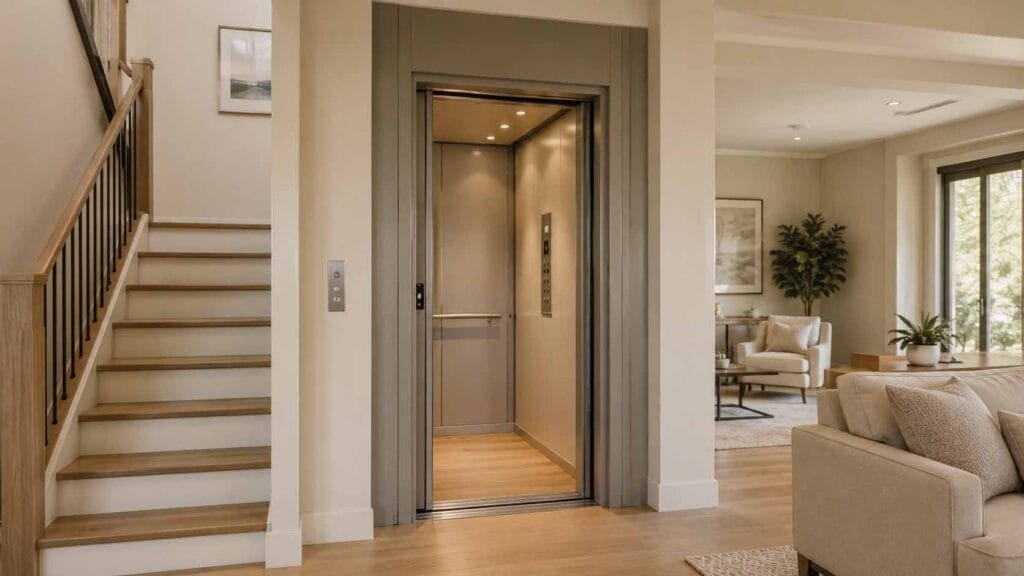
8. A manutenção de um elevador doméstico é complicada?
A manutenção de um elevador doméstico não costuma ser complicada, mas depende do tipo de sistema que escolher.
Sistemas que requerem pouca manutenção
Os elevadores com acionamento por parafuso e as plataformas elevatórias requerem, normalmente, menos manutenção.
Possuem estruturas mais simples e menos peças mecânicas, o que facilita a sua utilização no dia-a-dia.
Sistemas de manutenção média
Os elevadores hidráulicos necessitam de verificações regulares do sistema de óleo.
Isto inclui monitorizar os níveis de óleo e garantir que o sistema hidráulico funcione sem problemas ao longo do tempo.
Sistemas que exigem mais manutenção
Os elevadores de tração podem exigir uma inspeção mais regular de componentes essenciais, tais como cabos, sistemas de motor e unidades de controlo.
No entanto, também foram concebidos para um funcionamento estável a longo prazo, desde que sejam devidamente mantidos.
Sistemas pneumáticos
Os elevadores pneumáticos têm, normalmente, menos peças mecânicas, mas continuam a necessitar de inspeções periódicas das juntas e dos sistemas pneumáticos para garantir um desempenho estável.
Conclusão simples
A manutenção dos elevadores domésticos não é difícil.
A maioria dos sistemas requer apenas inspeções regulares e manutenção básica para garantir o seu funcionamento seguro e sem problemas.

9. Precisa de ajuda para escolher o elevador doméstico certo?
Se não tiver a certeza de quais os tipos de elevador doméstico mais adequados, ou se não souber se a sua casa permite a instalação de um, podemos ajudá-lo a verificar isso. Contacte a LJ Elevator para obter assistência.
Basta fornecer algumas informações básicas, tais como:
- Número de andares
- Espaço disponível
- Casa nova ou remodelação
Com base nisto, podemos ajudá-lo a:
- Verificar a viabilidade da instalação
- Recomendar tipos de elevadores adequados
- Sugira uma solução simples para o seu projeto
Escolher o elevador certo desde o início pode ajudá-lo a poupar custos, evitar erros e garantir uma instalação segura.
Tópicos que podem ser do seu interesse:
- Dimensões dos elevadores domésticos: guia completo de dimensões para elevadores residenciais
- Está a planear um elevador doméstico? Evite estes 5 erros comuns
- Compreender os três tipos de elevadores domésticos de tração
- Não se deixe enganar pelos “elevadores domésticos económicos”!
- Qual é o elevador doméstico ideal para a sua moradia?
- Posso instalar um elevador doméstico sem um poço previamente reservado?